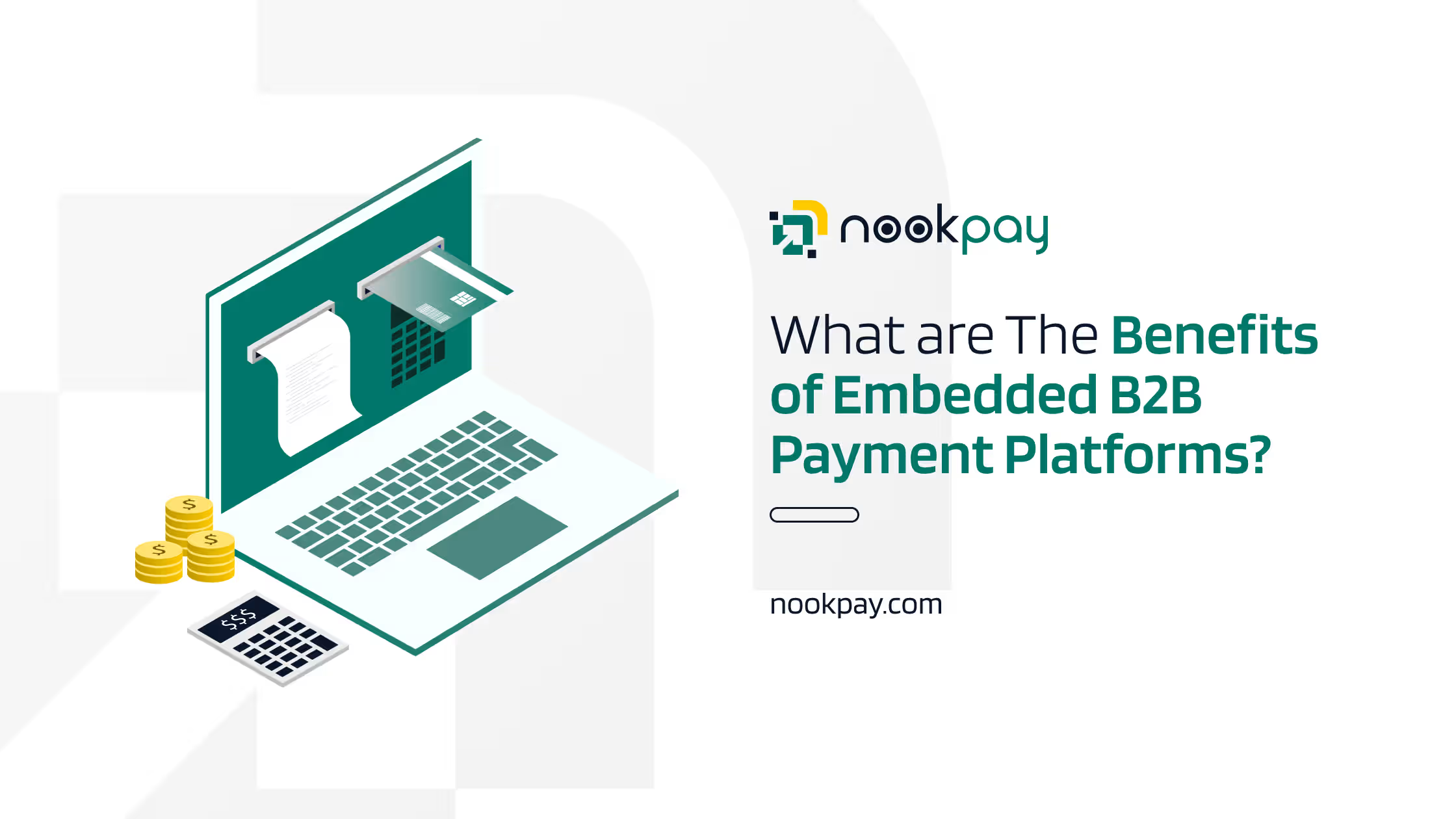
There’s a growing demand for embedded payment systems. Worldwide, this market is expected to reach over $7 billion in value by 2030, according to a report by ABN AMRO Ventures and Dealroom.
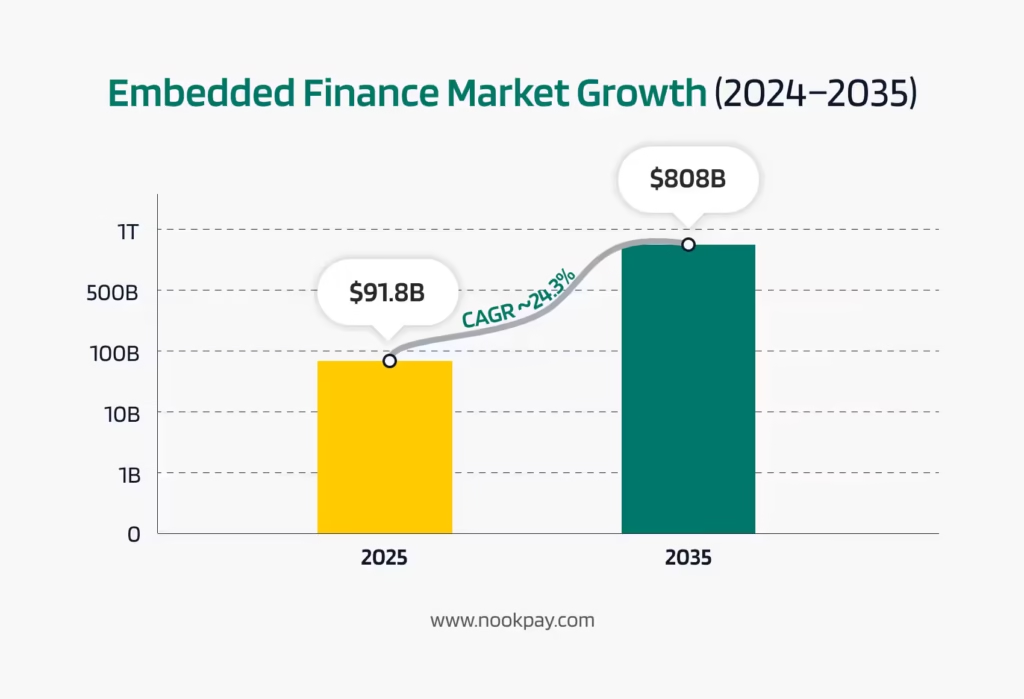
Some might question why embedded B2B payment platforms seem to be taking over.
The differences come from simple distinctions between the banking and fintech ecosystem. The former is nimble, adaptable and sophisticated when it comes to niche use cases and micro-offerings. The latter — despite stiff competition from the former — reigns due to its ability to execute complex, maximum security and highly reliable transactions.
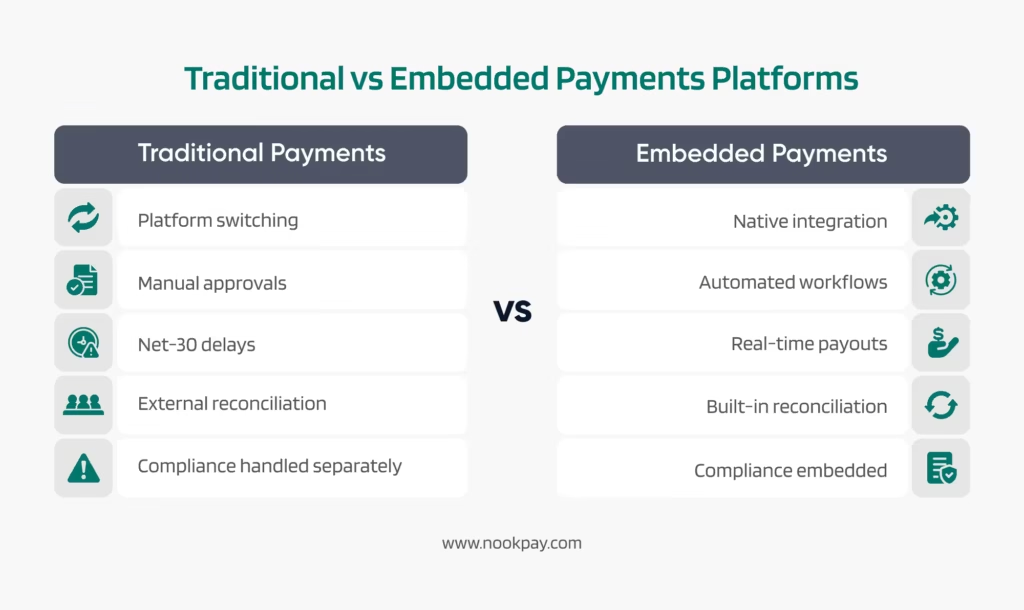
The best part? One of the key benefits of embedded B2B payment platforms is the fact that all they require for going live is an API-led integration.
Users benefit from the variety of options and easy payment processing. Businesses benefit from quickly processed transactions on feature-rich platforms that can be used by internal teams without much training. Everyone wins.
While this understanding only scratches the surface, there’s much to celebrate when it comes to this new type of payment infrastructure. Let’s understand what advantages it offers.
The Key Benefits of Embedded B2B Payment Platforms
Payments Without Platform Switching
When you use a third-party platform, chances are it is simply a redirecting service, perhaps focused only on invoice generation. That’s one way to add more manhours, with no extra benefit.
Instead, an embedded B2B payment platform integrates the payment aspect directly into the given workflow. No need to manage transactions externally.
This means, you no longer need to wait for approvals on a different platform, or be worried about vendors becoming dissatisfied. The speed of fulfilment goes up through the reduction of friction across the board.
For instance, Shopify uses Shopify Payments and Shop Pay to add this value within its ecosystem.
The takeaway is certainly clear: embedded payments increase operational velocity and reduce drop-offs in B2B flows.
From Net-30 to Real-Time Infrastructure
When we consider traditional transaction methods, there is a consistent delay that occurs due to the manual nature of approvals. There are also a variety of processes that occur before the actual amount is dispensed to vendors, influencers or affiliates.
Here’s a glimpse of how real-time payments becomes one of the key benefits of embedded B2B payment platforms:
- Automated commission calculations that occur within the payment platform, without the need for external validation or quality checks.
- Wallet balance adjustments in real-time, for both the payer and payee accounts.
- Instant or scheduled payouts, being sent and received at pretty much the same — no lag, no doubts left to be cleared.
The use cases for such a tool are immense, but particularly valuable for vendor-related transactions, affiliate marketing payouts, influencer payments, ad network settlements and so on.
Built-In Compliance and Risk Management
When you use traditional payment methods like banks and financial institutions, there is an added responsibility of completing lengthy, and often tedious KYC and other verification processes. An undue amount of time can be spent on such tasks.
One of the most valuable key benefits of embedded B2B payment platforms is that they typically include a list of vital, business-ready safety features, in the form of in-built:
- KYC or Know Your Customer Verification,
- AML or Anti-money Laundering Monitoring,
- Audit Trails,
- Sanctions Screenings, which are especially helpful in cross-border and large amount transactions, and,
- Tax Documentation Automations.
Additionally, digital billing and payment platforms of this nature tend to be in line with:
- FATF guidelines on AML compliance
- GDPR data protection requirements
- IRS reporting standards
Revenue Diversification and Monetization Opportunities
When you’re using an embedded B2B payment provider, the basic back-office function of making payments itself becomes a core revenue driver. Payouts and collections no longer remain operational costs.
Instead, organizations requiring these services can become revenue drivers through the uncovering of monetization opportunities.
These platforms are able to enable:
- Interchange revenue sharing on card transactions,
- FX markup margins on cross-border payments, and,
- Structured processing fees for every single transaction.
As a business, the wallet float income generated from held transactions and the subscription-style payout options allow for faster settlements and improved reporting for all involved.
Each customer ends up providing more revenue, and there’s a tendency towards platform stickiness enabled by the fact that financial services become part of the regular workflow. Uber is a business that monetizes embedded financial services offered to its drivers, as an example.
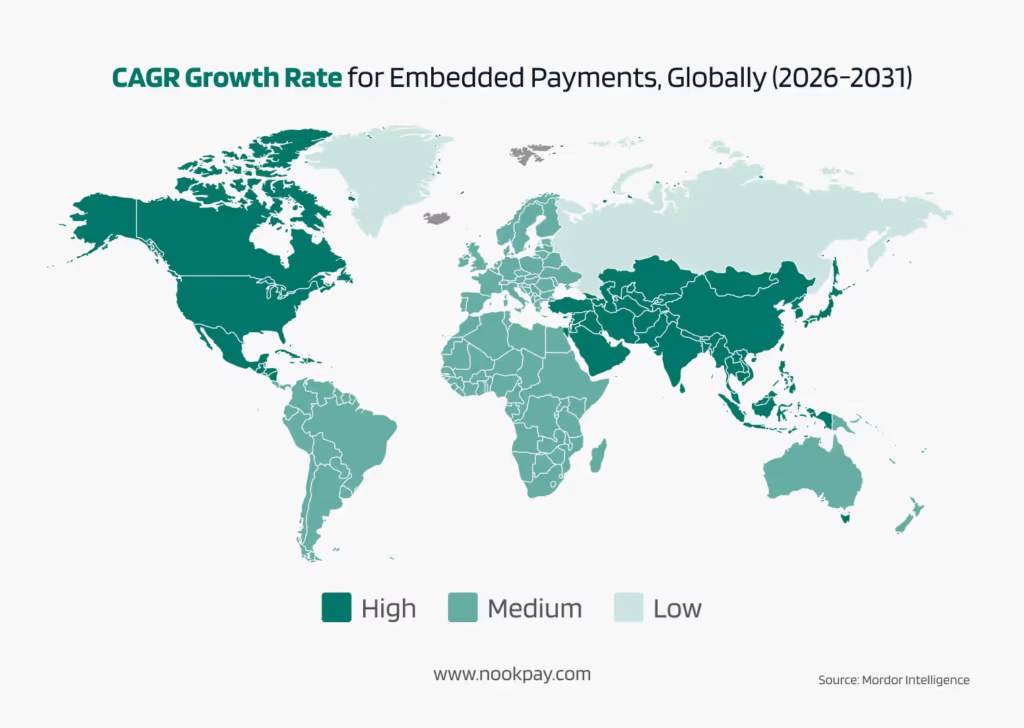
Global Expansion Without Payment Complexity
You don’t want to get limited to local shores simply because payments are difficult across countries, timezones and currencies. Using payment as a service platform like Nookpay ensures you don’t need to.
One of the sought-after key benefits of embedded B2B payment platforms is that they’re able to offer:
- Multi-currency support in real-time,
- Local payment options for vendors of all sizes,
- Automated forex conversions across multiple currencies, and,
- Adherence to transnational border compliance norms.
Automating Back-Office Complexity
What’s more? Operational efficiency becomes a strategic lever in your business. When finance professionals within your organization no longer have to tally each transaction manually across platforms, the time freed up can be put to better use.
The benefits are widespread:
- Reconciliation becomes self-sustained
- Reporting becomes real-time
- Manual workload gets cut down to minimum
- Ledger systems become a part of the system
Research from McKinsey indicates that incorporating automation into existing workflows lends to a clear 30-40% reduction in operating costs.
Payment Data as Business Intelligence
The transactions are just one part of the key benefits of embedded B2B payment platforms. What happens beyond the payment adds equally in terms of value.
When automated payables solutions are embedded into your system, they are able to generate:
- Real-time transaction dashboards
- Partner and vendor-level payout analytics
- Cash flow forecasting
- Risk scoring of all involved parties
This is a great way to gain strategic benefits including the ability to incorporate and weigh performance-based payout models, and the implementation of hybrid commission models.
You’re able to do more with the same set of information — supercharging existing databases into value-adding structures.
Competitive Differentiation and Ecosystem Control
Self-reliance is one of the lesser valued key benefits of embedded B2B payment platforms. Effectively, using this infrastructure enables:
- Higher platform stickiness
- Less dependency on third-parties
- Higher switching costs for customers
- Stronger ecosystem dependence
The simple takeaway here is that companies that allow you to control the financial ecosystem, allow you to wrest control of everything. Amazon is a great example of this, through its ‘Amazon Pay’ system that enables transactions across time and space in the same ecosystem — money simply never goes out.
Final Thoughts
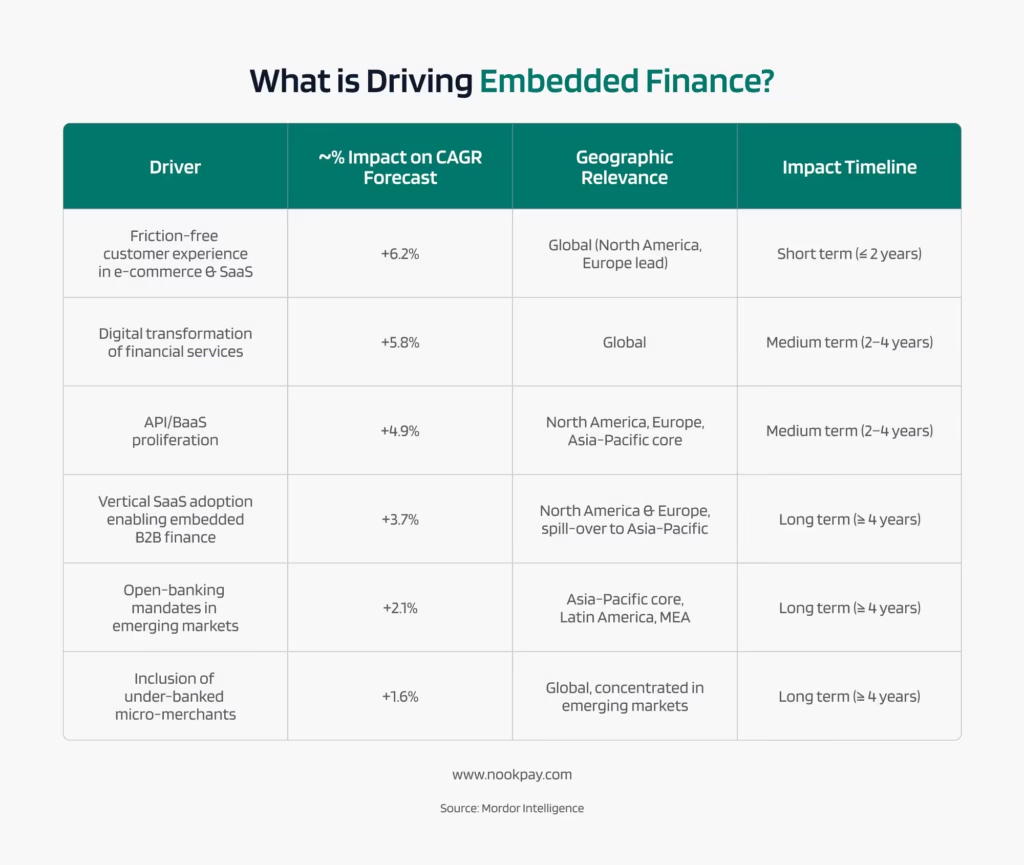
Industries where transaction volumes are high benefit most from embedded B2B payment systems. In fact, the key benefits of embedded B2B payment platforms are felt most evidently by:
- SaaS platforms
- Affiliate marketing networks
- Influencer marketplaces and agencies
- Gaming platforms and promoters
- Ad networks
- B2B marketplaces
Everything from multi-party revenue splits to escrow and milestone payments becomes quick, easy and efficient without adding any operational overhead.
Complex payout structures are easy to input and resolve — with zero errors and manual verification. You could say the biggest advantage truly ends up being the saved time and manpower across enterprises of all sizes.
Help Centre
1. How do influencer marketplaces benefit from having an embedded B2B payment platform?
Influencer marketplaces handle multi-party revenue splits for various promoters, milestone-based campaigns and large numbers of payouts over time. Using an embedded B2B payment solution simply allows for centralized onboarding, automation of commission calculations and faster settlements with creators.
2. Is having an integrated digital payment platform worth it for gaming providers or promoters?
High-frequency deposits and withdrawals require agility and precision from the side of gaming operators and promoters. An integrated payment platform reduces friction, strengthens compliance controls, and enables real-time payouts, making payouts a breeze while reducing overall operational costs.
3. What are some of the key benefits of embedded B2B payment platforms?
Embedded payable solutions increase operational velocity, automate reconciliation, and reduce dependency on third-party tools. They also allow for a variety of monetization opportunities, improve compliance readiness, and transform payments from a cost center into a scalable revenue driver.
4. Do embedded payment solutions offer more than support in completing transactions?
Yes — beyond processing transactions, embedded payment solutions generate actionable business intelligence. Real-time dashboards, payout analytics, automated compliance checks, and cash flow forecasting empower organizations to optimize performance, manage risk, and make data-driven strategic decisions.