There is a common misconception when it comes to vendors and third-party affiliates: they’re distant, and a contract completes the circle of trust.
But compliance isn’t a single checklist item. It is a storied system of policies, controls and frameworks that ensures affiliate payouts remain sound, transparent and legally right. The complete scope of it covers various aspects under affiliate payments such as:
- When payments must be released,
- How commissions are calculated,
- Disclosure of information to concerned parties, and
- How data and money moves across borders.
Forget the old days of links placed within blogs. Affiliate marketing is a lot more sophisticated now with influencers running social campaigns, performance-based ad networks and coupon biddings. The format is an effective medium for growth across industries — from fintech to SaaS, and from healthcare to FMCG.
It seems quite daunting, and complex. It may lead you to consider skipping it. Let’s understand if that’s a possibility.
Why is Affiliate Marketing Payment Compliance Necessary?
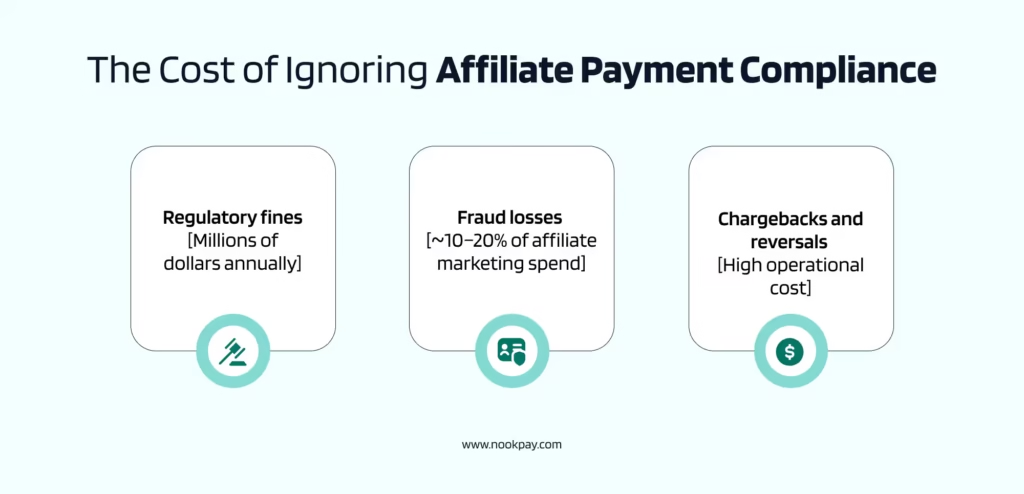
Following best practices for affiliate marketing payment compliance helps you cut down on an add-on cost of liability. There is indeed a significant cost which has to be borne by you if such regulatory mandates are ignored at any stage.
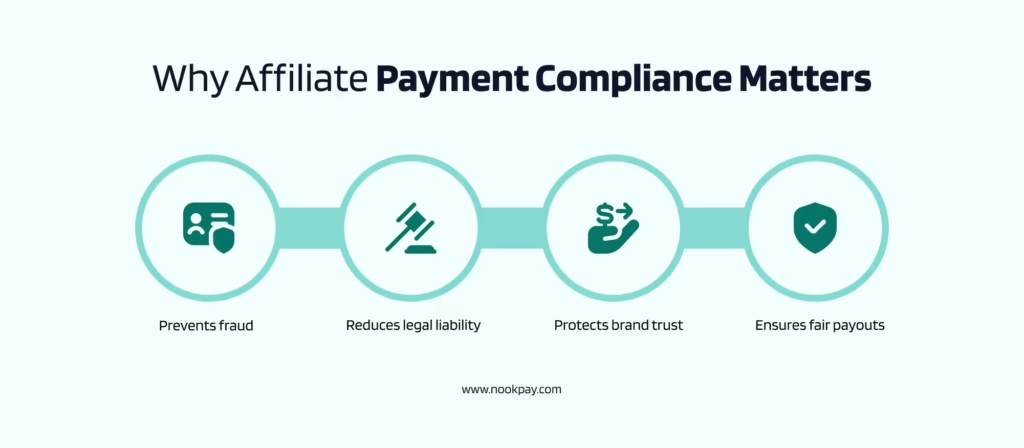
Compliance allows for organizations to build systems that reduce risk for themselves, customers and partners, while maintaining a standard quality of outcomes for all.
Consider the fact of fraudulent traffic on affiliate campaigns. If undetected, it leads to a loss of revenue for the advertiser, and brings no benefit to actual customers who may be in the market looking to purchase the said product or service.
When such affiliates are paid out without verification, there’s a net loss incurred through the entire affiliate marketing ecosystem. Securing this is one of the key benefits of payment compliance.
Let’s understand the six best ways in which payment compliance for affiliates can be secured.
Best Practices for Affiliate Marketing Payment Compliance
Establishing Clear Payment Policies and Terms
The basic foundation of any transaction process should be clarity and transparency. At the very outset of the relationship, clear terms must be laid down with respect to payments (among other issues).
This ensures affiliates know what they can expect from you, and there’s a clear system of accountability created for your affiliate manager, and finance department. Everyone knows what to do, and there is no guesswork involved.
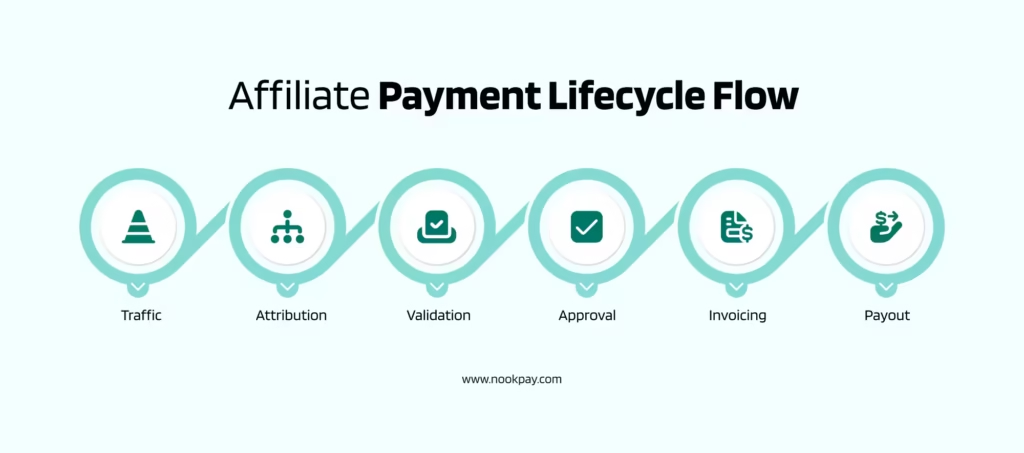
Here’s what the best practices for setting up terms and conditions must include:
- When the payment will be made
The affiliate marketer must know for a fact that when their payment is due, it is likely to arrive within a given timeframe without fail. This allows them to work without doubt, and give their 100% due to the implicit trust in this partnership.
Common structures include Net-30, Net-45, or monthly payment cycles.
- How the Payment will be Made
The payment method needs to be clearly delineated in the terms. Suppose one affiliate prefers a netbanking transfer to a given bank account, the same should be followed in their case. However, if another publisher decides they want a crypto payout in their crypto wallet, the same should be followed.
Additionally, as is evident across best practices for affiliate marketing payment compliance, all these terms and conditions should be clearly listed out in the affiliate agreement or contract.
- Minimum Thresholds and Release Conditions
Processing payments for small sums of money on a regular basis may not always be viable for a business. In that case, a minimum number should be set for a payout to be processed successfully. This can be decided by the business at, say, $50 or $100, or it can be mutually agreed to with a given affiliate cohort.
In the case of affiliate marketing payments, chargebacks and attribution verification windows need to be closed to ensure the right amount is being paid.
- Acknowledgement of Said Terms and Conditions
In case of disagreements, an affiliate may say they were not aware, or they weren’t consulted. As an organization working with a third-party promoter, compliance requires clear terms and contract negotiations on both ends.
This means, the terms laid out shouldn’t be a PDF dropped to the affiliate’s inbox. Instead, it should be physically or digitally signed by them to ensure they understand the terms, and agree with them.
Enforce Compliance via Transparent Disclosure Requirements
Payment compliance is inseparable from disclosure compliance. One of the clear best practices for affiliate marketing payment compliance is having users know that promoters are paid for advertising to them.
Consider this: the FTC’s compliance guidelines require that material connections between any advertisers and affiliates be disclosed, clearly and conspicuously, wherever such materials are placed. Whether it is blogs, Youtube videos, Tiktok posts or any other format, this is a basic rule that must be followed.
Similar principles exist in other regions, including the UK’s ASA guidelines and EU consumer protection laws.
Monitoring Fraud and Non-Compliance
A major responsibility of advertisers or businesses in the process of creating best practices for affiliate marketing payment compliance becomes verification.
Here’s one way to look at it: fraudulent practices like cookie stuffing, ad hijacking and URL manipulation are often committed in the affiliate marketing space. If payments are processed without due diligence, there are chances of awarding publishers for bad behaviour too.
To ensure the compliance remains tight across the entire affiliate marketing ecosystem, activity audits and reviews need to be enabled.
Forced clicks and bot traffic shouldn’t be rewarded since conducting poor quality, highly susceptible promotions also exposes actual customers to risk. Automated tools can also be implemented to cut down on the man hours needed to ensure quality outcomes.
Data Protection
Global financial and payment regulations are vital to follow while conducting any cross-border transactions. Even within a given country, the rules of how payouts can be processed may vary based on sum, vendor or payment channel.
To comply with the best practices for affiliate marketing payment compliance, advertisers should do the following:
- Align with Data Protection Norms
The General Data Protection Regulation (GDPR) in the EU requires consent from consumers for cookie-based tracking and data collection in the process. Such regulations are in place with varying terms across countries. In fact, regional or state-level laws can add further layers.
While making affiliate marketing payments, it is important to ensure that affiliates are operating correctly in the regions where you wish to promote, with all the consumer protections in place. Otherwise, you’re playing with fire and the entire campaign (along with its results) becomes undue.
- Check on Taxation Rules
After you have verified affiliates actions with metrics across your affiliate marketing software, and CRM, it is vital to check what the law says about taxes — and comply to avoid penalties.
For instance, in India, the GST tax would need to be paid at source. In the US, a business may be required to fill out the appropriate tax forms such as W-9 or W-8BEN.
The amounts and period of payment as well as tax filing is completely subjective to each country. Therefore, having a good understanding of the tax laws is critical to follow the best practices for affiliate marketing payment compliance.
- Maintain Cross-border Considerations
When paying to any bank account, or transferring money into the e-wallet of any individual, you must obtain the relevant identification documentation. This aids in verifying whether they are who they say they are.
Usually, in the case of vendor, affiliate or influencer payments, getting it right in the very first instance is advised, Reversing payments can be a huge hassle and leads to loss for the advertiser.
- Create Clear Documentation, Audits
Before and after fulfilling any payment towards affiliates, vendors or influencers, it is crucial to review documentation and match up all the relevant details. If something seems out of place, then payment can be deferred till it isn’t.
This type of clarity also enables organizations to run audits and match all details back both ways, so nothing is out of place. All payments and money transfers get documented and are in the clear.
Implementing Effective Payment Systems and Automation
Another one of the best practices for affiliate marketing payment compliance is streamlining payment execution while maintaining compliance through automation.
By selecting the right payments platform, everything from KYC processes to AML can be completed on a single platform. In fact, multi-currency payouts can be dispensed seamlessly and automatically without any hassles.
The benefits of using modern, advanced payouts tools are numerous:
- Commissions get calculated automatically through integration across different marketing platforms,
- Invoices are generated with accurate, vetted values in a regular and timely manner,
- Scheduled transfers are carried out at regular intervals, without any manual errors,
- Fraud gets checked through built-in features and compliance is set up within the system.
For affiliates and influencers, this becomes a trustworthy experience, leading to longer term relationships with the same providers.
Clear Communication and Partner Education
The last and most important leg of affiliate payments is perhaps maintaining clear and open lines of communication with affiliates. New compliance rules or tax guidelines should be communicated with partners, and not informed through invoices.
As one of the best practices for affiliate marketing payment compliance, here’s how you can create better alignment with ad networks and publishers:
- Send policy revisions in writing and require acknowledgment.
- Educate partners on legal requirements and program rules.
- Provide real-time dashboards and payout reports, beyond scheduled invoices.
- Open up dedicated communication channels for compliance questions.
Over time, this kind of consistency will ensure partners sync with you on the most important aspects of compliance and regulatory requirements. It also democratizes the process, and ensures everyone feels involved, rather than becoming a chore.
Final Thoughts
Brand safety and legal protection in the affiliate marketing, influencer marketing and vendor payment space begins at proper compliance monitoring.
Payments are the one aspect of control in this two-way relationship that must be most carefully managed to ensure no legal violations or souring of relationships occurs. By establishing clear payment terms, enforcing disclosure rules, monitoring fraud, protecting data, automating payouts, and educating partners, businesses can reduce the risk.
As affiliate marketing continues to grow, and regulatory scrutiny becomes increasingly complex to manage, using a tool that enables compliance-first payouts, like Nookpay, becomes a strategic advantage in itself.
Help Centre
- What is affiliate payment compliance and why does it matter?
The legal, financial and disclosure rules involved in the affiliate or publisher payment process together make up affiliate payment compliance. It is crucial because non-compliance increases fraud risk, regulatory penalties, and reputational damage, while compliant systems protect advertisers, partners, and customers across regions and payment cycles.
- Which payouts policies should businesses design for affiliate promoters?
Various variables such as payout timelines, commission calculations, payment methods, minimum thresholds, and release conditions should be shared upfront with affiliate promoters. Transparent policies increase trust and lead to more optimal partnerships since affiliates are aware about all contractual areas in advance. Additionally, it is one of the best practices for affiliate marketing payment compliance.
- How do disclosure requirements impact affiliate payment compliance globally?
Affiliates must be open and honest about the transactional relationship they have with brands online, as per the rules of the FTC in the US. Similar rules exist in the UK under the ASA and India’s ASCI code, which work toward ethical promotion. Following them protects businesses from fines, takedowns, and legal scrutiny.
- How can companies prevent fraud in affiliate marketing payments?
Fraud prevention involves monitoring traffic quality, detecting bot activity, auditing affiliate behavior, and blocking tactics like cookie stuffing or ad hijacking. Using automated compliance and fraud-detection tools helps ensure payouts reward legitimate performance, protecting revenue and maintaining a healthy affiliate ecosystem.